Barefoot Running & Free Book Download

Jul 23, 2011 by

I am working on barefoot running again.  Why? You might ask.  Read my newly-added section of my blog called Barefoot Running – Part 2 to find out.  In this lengthy write-up, I cover my experience over the last year to move toward minimalist shoes. Please check it out here.

I have followed Jason Robillard’s Barefoot Running University blog for some time. He recently completed the Western States 100 mile ultra marathon and has a fascinating race report on his blog.  You should read it.

I am currently reading Jason’s book, The Barefoot Running Book.   He has graciously offered a free PDF download of this book here.  No catches. Just download and read.  Even if you never plan to run without shoes, you should read this book!
You can also buy it on Amazon by clicking on the picture below:

POFIFOTO!


read more

Related Posts

Share This

Product Review: Camelbak Octane XCT 2011 Hydration Pack

Jul 20, 2011 by

Product Review: Camelbak Octane XCT 2011 Hydration Pack

Camelbak Octane XCT

Short Version: Highly recommend, very satisfied.  Only downside is fluid getting warm after 1 1/2 -2 hours.

Long Version:Summer training in South Carolina is hot and humid, and I believe I sweat more than average.  I lose 3-4 pounds on 2-3 hour runs.  So, fluid loss is a big concern for me.  During the week, most of my runs are in the neighborhood and are less than an hour.  For these runs, I usually prepare two handheld bottles that hold 8-10 ounces of fluids.  I’ll carry one and put one in the newspaper box and swap it out on a pass by.

For Saturday morning runs that last 2-3 hours, I head out of the neighborhood for a change of scenery.  This makes for a challenge to carry enough fluids for the heat.  For these runs, I normally wear a Fuel Belt with 4 to 6 eight ounce bottles.  The problem with this is that 6 bottles is too heavy and the belt falls down (I’ve lost a few inches in the waist since I stated running!), so I can only go with 4.  Sometimes, I’d stash an additional large water bottle at the neighborhood entrance and refill when I passed by.  Well, this summer as I decided to hit the trails more for Saturday adventures, this meant a challenge for liquids.  I also wanted to carry my phone.

I decided to try a hydration pack, which is a fancy term for water back pack.  After some research, I decided on the Camelbak Octane XCT with their 100 ounce Antidote reservoir.  Camelbak gears this pack toward runners.  They also make hiker and cycle targeted packs in a variety of reservoir sizes – 50, 70 and 100 ounces.  Those versions were prevalent in my local hiking and cycling stores, but I could not find an Octane, so I ordered mine from RunningWarehouse.com with free 2-day shipping.  There were 3 color choices, black, green, and red.  I considered the green, but it was a tad flashy for me.  I figured black was a good safe bet.  My wife liked the red.  So, I went with red.

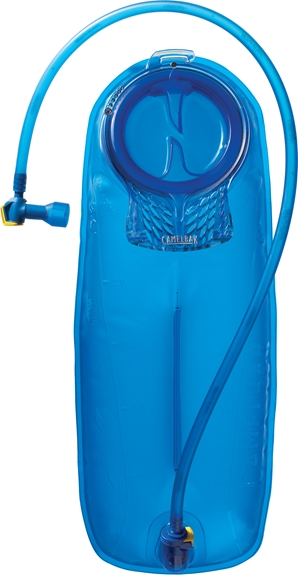
As promised, I had the pack in the 2 days.  Thumbs up for Running Warehouse.  I spent some time before dinner that night checking out the reservoir system.  The system consists of the reservoir bladder, a tube, and the mouthpiece valve.  The reservoir fill opening is about 4 inches wide and seals into place with a rubber gasket after about a 1/4 turn.

Antidote Reservoir

The tube snaps into the bottom of the reservoir and routes up through the pack.  The mouth piece has a open/close valve.  You keep it open and bite down on the mouthpiece  and suck out the fluid.  Pretty simple.  The pack itself has several pockets.  One is a small pocket on the left strap which is a great place for a gel packet or two.  Two zippered pockets are on the waist belt and are fine for cell phones and keys.  Then, the final pocket is in the center of the back.  There is also a bungee cord on the back in the shape of an X, which Camelbak says is a good spot to hold a light jacket.  After dinner, I put in about 30 ounces and went for a 4 mile trail run in the 90 degree heat.

First Impressions

The first thing I noticed was the sloshing noise.  I’m sure the partially-full reservoir compounded this. After a couple of minutes, I stopped noticing it. One concern I had was whether the pack would rub anywhere.  On my first few runs, I did not experience any problems.  There are 5 adjustment points and I was able to work out a proper fit.  On my longest run with it (15 mile trail) it did rub raw places on my hip bones.  I did not notice this until after the run, though.

Another concern I had was how the weight of the pack would affect me.  A full reservoir and pack would weigh 5-7 pounds.  This may not sound like much, but over the course of 2-3 hours this may make my already questionable posture even worse.  I did have some slight soreness in my upper back after the first few runs, but it did not bother me after a week or so. I try to remember to keep good posture.

The Big Test

After a few runs with the pack , I was ready to put it to the real test during the Xterra Harbison Half Marathon.  The course was to have 5 or so aid stations, but I had never done a trail run race or run a race in the July heat soup of South Carolina.  I felt the pack was a good option for this race.  One trick I learned from the Camelback website was to fill the reservoir partially the night before and put it flat in the freezer.  Before heading out for the run the next day, I added a bit more fluid to make my total amount for this run around 64 ounces.  I can remember this because I included 4 Nuun electrolyte tablets in my mixture – 1 per 16 oz.  I ended up drinking about 40  of the 64 ounces.  I probably would have taken in more, had the water not warmed up.  I was still sweating at the end, which to me, meant I kept well-hydrated in the heat.  I believe the electrolytes helped, too. I was very pleased with the pack during the run and barely noticed it was there. I did not notice the rubbed places on my hip bones until after the runs.  I’m not 100% sure how they happened.  Maybe the adjustments came looser than usual and I did not notice.  Test passed.

Final Thoughts

For me this pack is going to be a good option.  It holds enough fluid for me and has just enough room to carry a few things.  Some people may not like the added weight.  Keeping the fluids cool is a challenge, though.  In the future, I will freeze about 90% the night before, instead of the 75% I tried for the half marathon.  The ice was fully thawed and warm in the summer heat after about 2 1/2 hours.  It didn’t help that I had to take it out of the freezer well over an hour before the race.  Also, the water that sits in the tube is always warm on the first swig.  Not much to do about that. Keeping the reservoir clean is going to require some effort, too.  Camelbak sells a $20 cleaning kit to help with this that includes brushes and cleaning tablets.  So far, I have made sure I air it out diligently after use. Overall, I am very satisfied.


read more

Who Knew?

Jul 17, 2011 by

When I first started running, I knew virtually nothing about the running world.  As time passed and I read blogs, books and magazines, my eyes were opened to a whole new vocabulary and culture.  Here is a list of things I didn’t know early on.  Maybe these are new to you, too.

1. PR. This stands for personal record. It means your best time at a certain distance race. You may enter a race and hear others talking about going for a PR, waiting for the race the start.  The beauty of beginning running is that every race you run at a new distance is a PR!

2. High-tech fabric. I think this was once called polyester. Cotton is a no-no in the running world now. Now, clothing manufacturers are mixing polyester with other materials to make fabrics that wick away moisture quickly.  Seems to work.

3. Bodyglide. You know those nooks/crannies and spots that can become really uncomfortable at the wrong time? Like in the middle of a long run?  Bodyglide is anti-chafe lubricant for those spots. It comes in a container like a deodorant stick and you apply to chafe-prone areas.  Definitely works.

4.People run barefoot on purpose. Apparently elite runners have know for years that running barefoot for a short distances improved form and helped to strengthen feet.  A couple of years ago, a book came out called Born to Run   Christopher McDougall that has launched a new interest in barefoot running and “barefoot shoes” (also called minimalist shoes).

5. There is a huge variety of running shoes. I thought shoes were just different just because they were made different companies or had different colors. Turns out people have high arches, medium arches, no arches and their feet react to the ground differently on impact, so companies try to design shoes to accommodate these factors.  Do they do a good job?  The people and book mentioned in #4 above would say no.

6. Plantar Fasciitis. This is one I wish I had never learned.  The Plantar Fascia is the soft connecting tissue on the bottom of your foot.  It can become inflamed, causing a great deal of pain, usually in the heel.  It can sideline you for weeks.  I experienced this in the fall of 2010.

7. Socks could cost so much. Cotton socks are a no-no as well for most people.  They tend to cause blisters.  The moisture wicking socks can cost $8-$15 a pair!  They are worth it, too.  I actually had some blistering issues with high tech socks as well, once I started running distances of 10+ miles.  I finally solved that with a thinner sock and a different method of tying my laces.  My favorite socks right now are Injinis.

8. It’s not how you start, it’s how you finish. One hard lesson I learned in races is that if you go too fast early on, the last part of a race is not too fun.  One of the keys to racing well is to stick with the pace you’ve trained for, especially early.  Try not to get sucked into the race start surge.

9. Running is fun. OK, maybe not 100% of the time.  But if you stick with it, I think you’ll find this to be the case.  I never imagined I would enjoy running so much.  I hope you will, too.

POFIFOTO!


read more

Related Posts

Tags

Share This

Xterra Harbison Half Marathon Race Review

Jul 11, 2011 by

Xterra Harbison Half Marathon Race Review


Editors Note: This is a review of the 2011 race. I did not run the 2012 race.

This is my first race review.  The Xterra Harbison Half also had a lot of firsts:

  • The first Xterra Half Marathon at Harbison State Forest
  • My first trail race
  • The first time I’d used my New Balance trail shoes for a race
  • The first time I’d used a hydration back pack to carry water
  • The first time I ran off course in a race

As it can be with first-times, rookie mistakes were made by both me and the race organizers.  Here’s my summary.

Weather

The weather was just as expected for the start of the race – about 75 degrees and very humid, but mostly cloudy.   The dew point was around 75 as well.  There was fog on Lake Murray as I crossed the dam on the way to Harbison.  This made for very uncomfortable conditions.  The map showed we’d have 5 aid stations along the way, but an email from the race director advised runners to also carry their own water.  I was already planning this, having received a Camelbak hydration pack for Father’s Day to use on my longer training runs.  As an added heat precaution, I had tested Nuun electrolyte tablets with my pack in training, and decided to use those as well.  I also carried my own Gu Roctane gels.

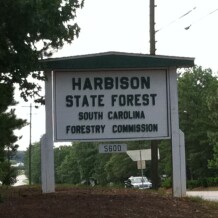
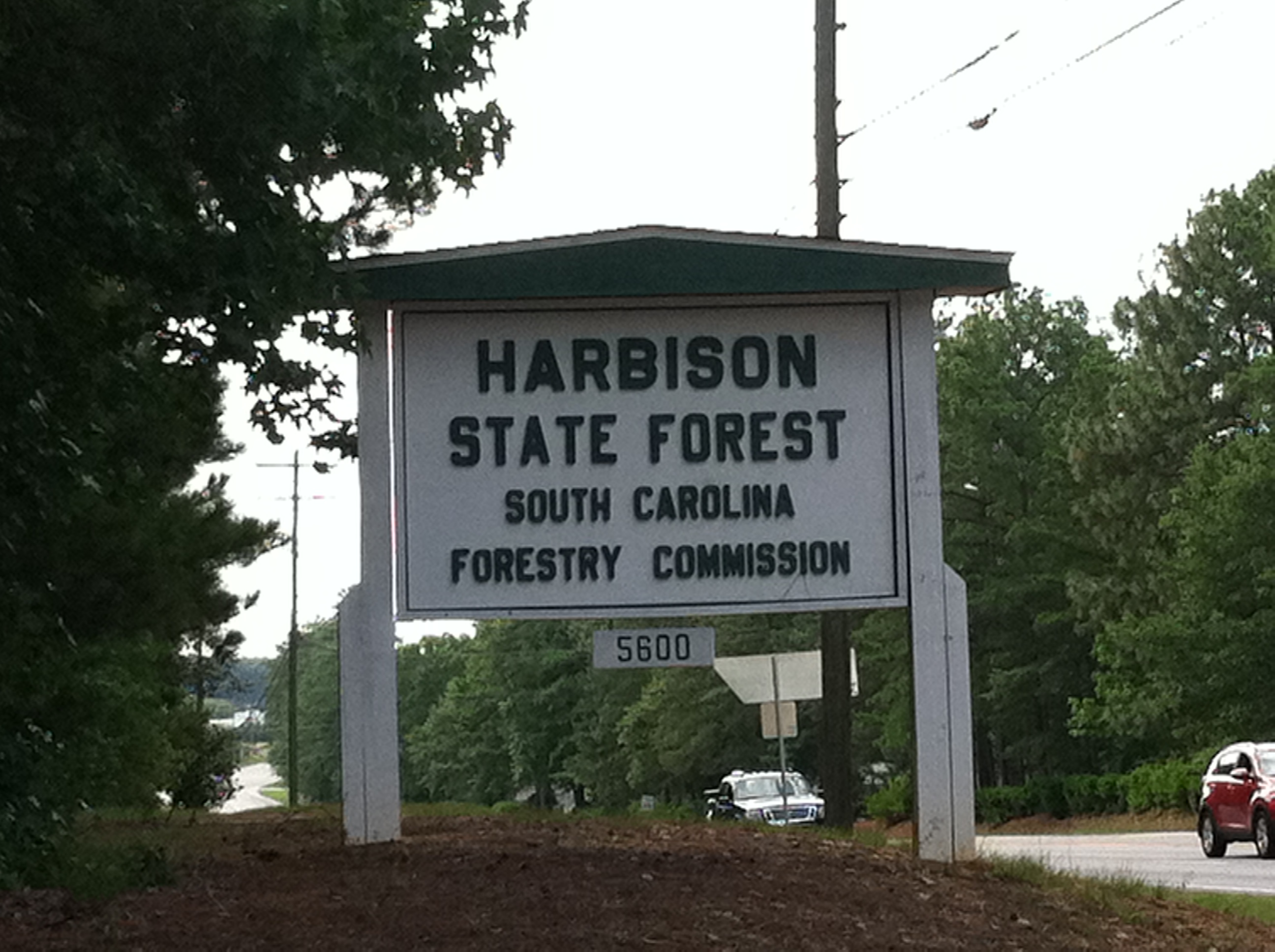
Entrance Sign to Harbison State Forest

The Race: 2:30 Goal

The course seemed pretty tough for me, the novice trail runner.  The starting line was on a two lane gravel road, and we ran about 1/4 mile uphill before hitting the woods.  I knew the first 4-5 miles were “2 lane” trails, so I was hoping by the time we hit the woods, the field would have settled into its natural order, so much passing would not be needed.  This actually seemed to happen pretty well.  I didn’t have to pass too many people on the trail, and I don’t think I held up too many. So these first 4-5 miles went OK but seemed too fast a pace.  My GPS watch was not tracking properly due to the tree cover and terrain.  What I thought were 10:00 mile splits early were actually closer to 9:00.   By the time we got to the Spider Woman II “one lane” trail, somewhere between miles 4 and 5, we had a small group that was making good progress, but really not needing to pass.  This was good since this section was basically single file.  And, as expected, this 3 mile section was the toughest.  Being in a small group here seemed to push the pace, and I think we covered that section around a 10:00 pace.  At the end of that section, I was wishing the race was a 10K, but I still had 5+ miles to go.  At this point, the running got pretty lonely.  The pack that had stayed together through the tough section  started to spread out.  Occasionally, I’d come up on another runner, and we’d hang together for a bit, talking about humidity, GPS watches or hydration packs.  One man that I ran with a bit fell twice.  He seemed OK, but I eventually moved on past him.  About mile 11, we hit the last aid station, and I was looking forward to  finishing.  The station here gave us a cold wet rag for our faces and it felt great. I dumped ice water on my head and soaked my Buff head cover.  I knew my GPS had been acting up, but at this point, I knew I could make my goal of 2:30, if I just kept steady.

Bonus Miles

By now, I was occasionally (OK, almost always) walking up hills. I didn’t think this last section was  going to be  too difficult, terrain-wise, but my feet were developing  hot spots so I was ready to get this over with.  Unfortunately, this is where the day turn a wrong turn – or rather a missed turn.  Around mile 11.5 or so, we were supposed to hang a right to go back toward the start/finish line. At this point there were a couple of red arrow signs, one seemed to be pointing right, and the other seemed to be pointing straight.  The group of 5 or so that I was tailing went straight, and I followed.  Unfortunately, we were supposed to turn right.  After a mile, I realized the mistake and turned around. I met others who had done the same thing as our group, and they turned around.  When we made it back to the turn, there was a race official there.  Too bad he was not there 30 minutes before hand!  At this point, my feet and I just wanted to get this behind us.  I did a walk/run the last 1.5 miles and made it to the finish about the 2:48 mark.  I’m not sure of my official time because as of Monday night, I cannot find any official results posted.  At the end of the day,  I had run an extra 2 miles. My overall pace per mile was about 11:20, which means I would have been in the 2:25 neighborhood for the official 13.1.

Post Race

As I crossed the line, someone handed me a bottle of water. I’m glad he did.  The previous finishers and/or 5K finishers seemed to have completely drained all the water and Gatorade from the gazebo refreshment area.  One poor guy was not doing well and in need of water, but he could find any.  I didn’t see any one ready to offer first-aid, either.  There were some bagel quarters and cookies, but any fruit was gone.  I saw lots of orange peels but no oranges.  Not the best post-race spread.

One of the guys in the pack that missed the turn (and did not turn around with me) saw me, and said he eventually saw a truck and hitched a ride back to the finish once they realized how off course they had become.

Final Thoughts

I made a few mistakes, as mentioned. I probably ran too fast the first half of the race (as usual).  I also should have had the course map with me.  This being my first trail race, I did not know what to expect for course markings. On the positive side, my hydration pack with electrolytes was a smart move.  I did not get terribly dehydrated, despite the humid conditions.  Also, this was the longest run in the New Balance trail shoes and they did very well.

I’m sure the race organizers will get a lot of negative feedback, so I’m not going to slam them too bad here.  After all, I did not volunteer to help.   Thanks to Marathon Majic and Xterra for putting this on. This was the first time for this event, and there is always room for improvement. I am glad people are organizing events.  Organizing races is a tough endeavor, and trail run logistics look even worse than road races.  So, I expected some first time miscues.  Here are my suggestions for next time:

1. Work out something with the park to include the parking fee in the registration fee.  It is only $5.  The big problem with this was the car line it created at the drop box.  Many people did not heed the advice to have the slip filled out before hand.  The organizers did advise to fill this out before hand, but some did not listen.  Just try to eliminate this part.

2. Better course markings. Again, trail logistics are extremely tough, and I don’t know how others do it, but the small signs for 3, 5, 7, 9, 11 were too small.  I don’t remember seeing 5 or 9, actually.  Also, many of the white markers hanging from the trees fell.  Not sure if runners were pulling or they fell on their own.  Also, a couple of place could have benefited from an arrow instead of or in addition to the small landscaping flags.

3. Make sure enough post race refreshments are available. Already commented on this above.

4.  Different Color t-shirt for different length race.  The technical tees were a nice touch.  I liked the volunteer’s bright yellow color.  The other was white for both 5K and Half.  Do something to distinguish half shirts from 5K shirts.

I can’t say for sure I’ll be back next year.  If I don’t, it will be heat related, not organizer related.  Maybe I’ll volunteer.
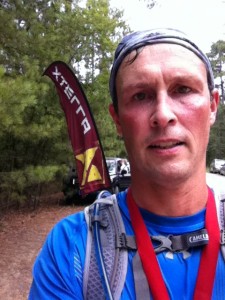
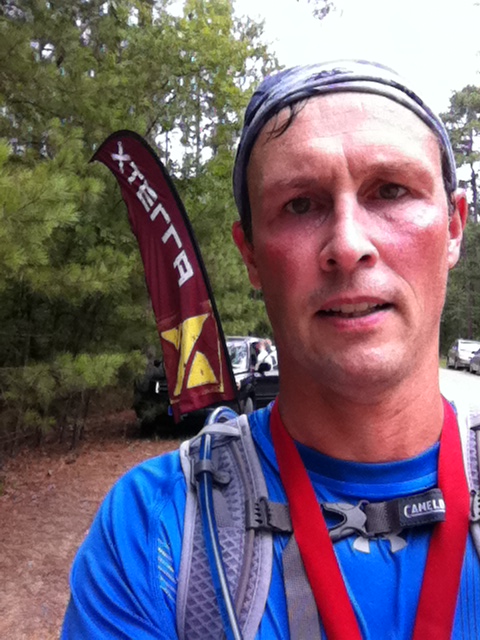
The Author After the Race


POFIFOTO!

read more

Myrtle Beach State Park Run
Jul 6, 2011 by

Myrtle Beach State Park Run
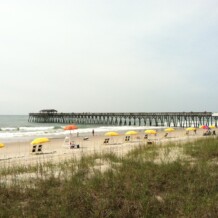
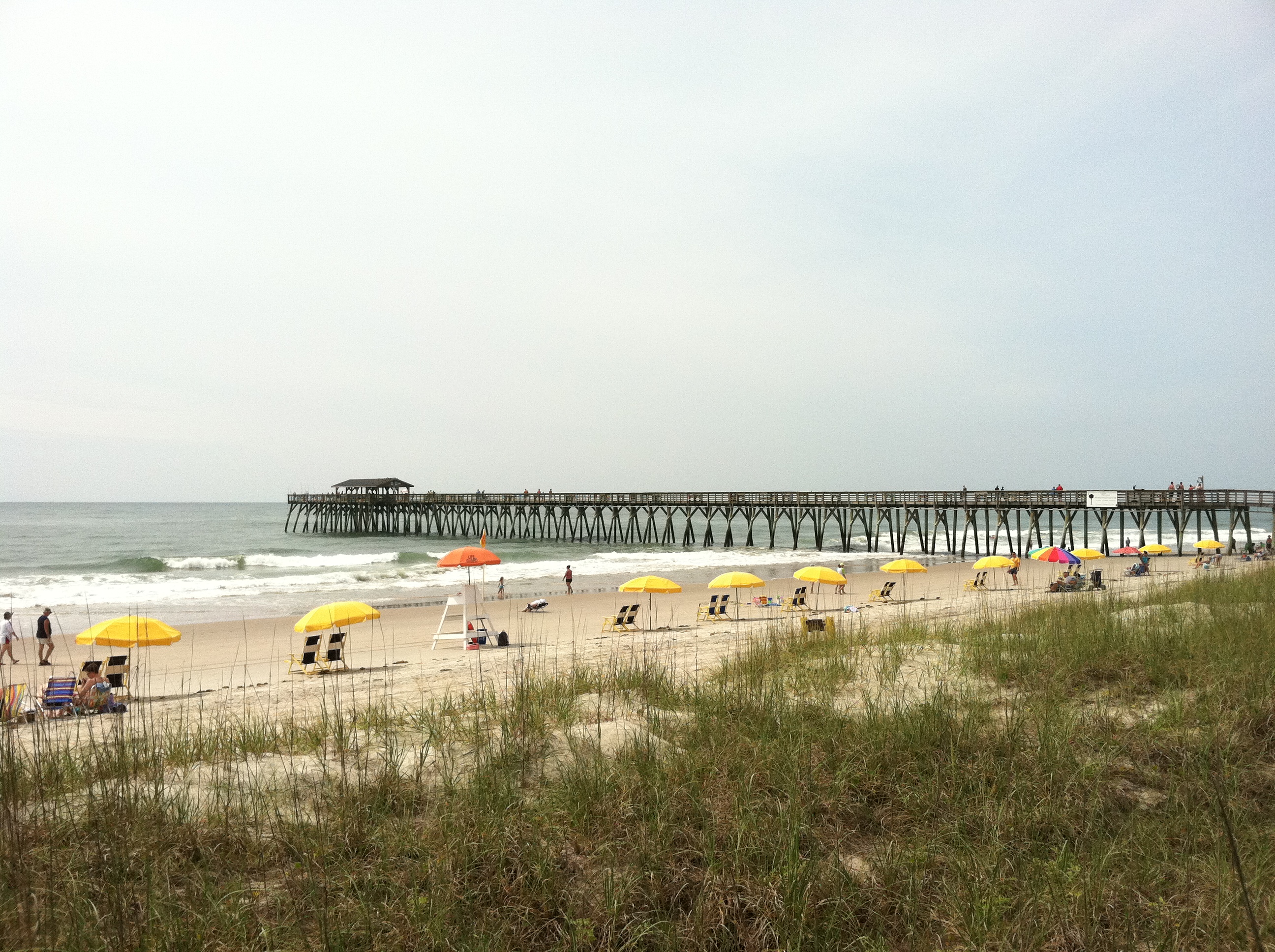
Myrtle Beach State Park Pier

One of my goals in starting this blog was to highlight various state parks, forests and other destinations in South Carolina as places to go run.  My first attempt at such a highlight is Myrtle Beach State Park.

Back in June, my family and I headed to Myrtle Beach for our summer vacation, as I highlighted in a previous post, Vacation Running.  While there, I planned to visit Myrtle Beach State Park to check out the trails for a run.  This summer, one of my main goals is to hit the shade more.  These trails gave me a chance to do just that.

I checked out the official park website to get an idea of what to expect.  The park is located  at the south end of Myrtle Beach, close to the airport. I saw the park had 2 trails,  the Yaupon Trail and the Sculptured Oak Trail, totaling about 1 mile. OK, not much length, but they sounded interesting.   The site provides this descriptions:  “The “Sculptured Oak Nature Trail” provides a rare opportunity to see one of the last stands of maritime forest on the northern coast of South Carolina”. So off I went.

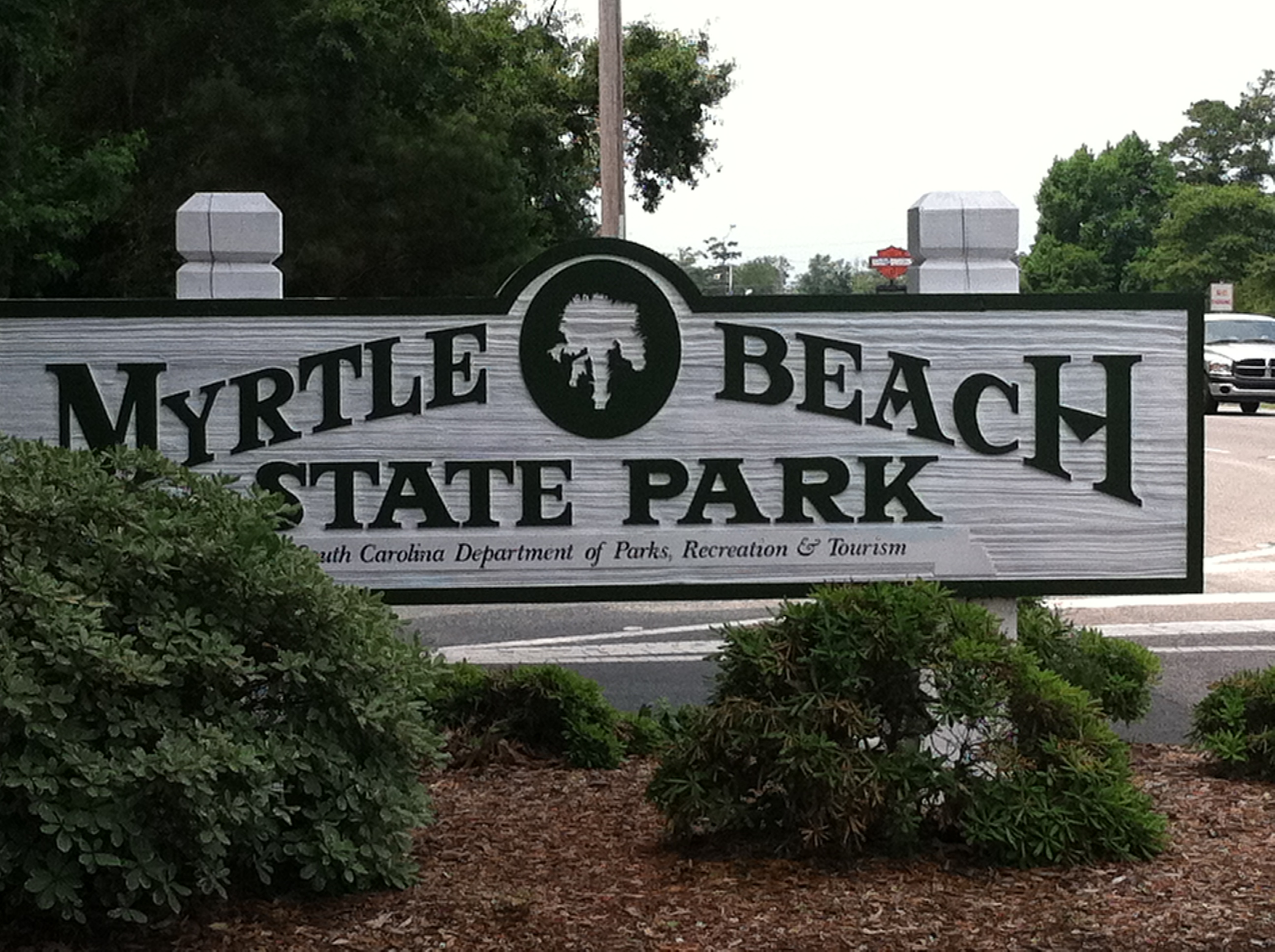
Myrtle Beach State Park Entrance

Park Entrance

The admission to the park is listed on the site, but I was by myself, so it cost $5 to get in.  I drove right in and found a parking space near the pier entrance.  Neither the beach nor the facilities were crowded.  There were several shelters and picnic tables for use.  A few families appeared to be having parties at shelters.  I checked out the pier and the beach before I headed back up to the trail entrance.  Heading down the trail was like stepping into another world.

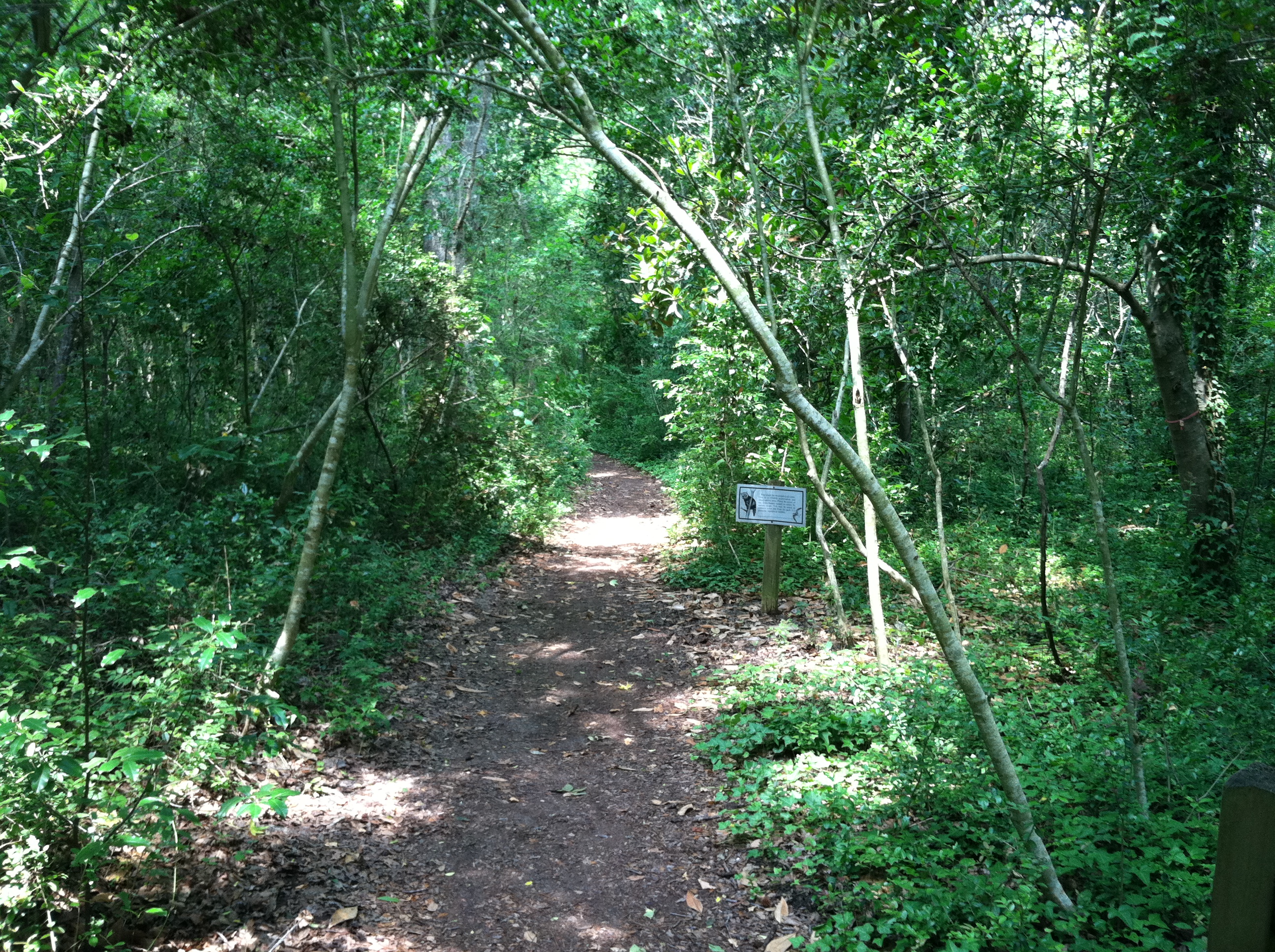
Trail Beginning

The run was not difficult at all.
Of course, it was pretty much flat, and the main obstacles were a few roots.  I was wearing my New Balance Minimus Trail shoes, but any shoe would do for this trail.  This would probably be a good trail for a beginner barefoot runner to try as well.


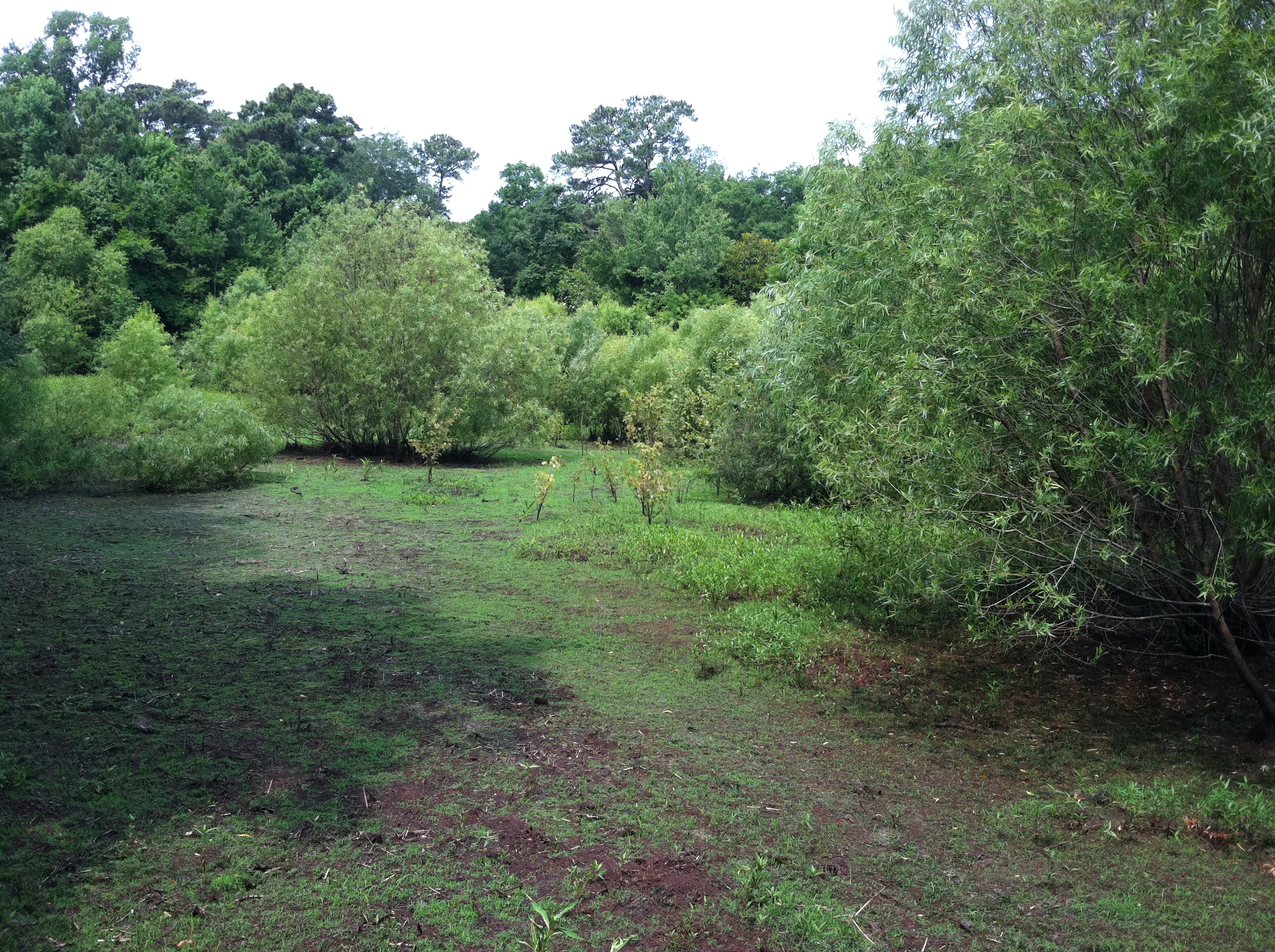
Myrtle Beach State Park Pond

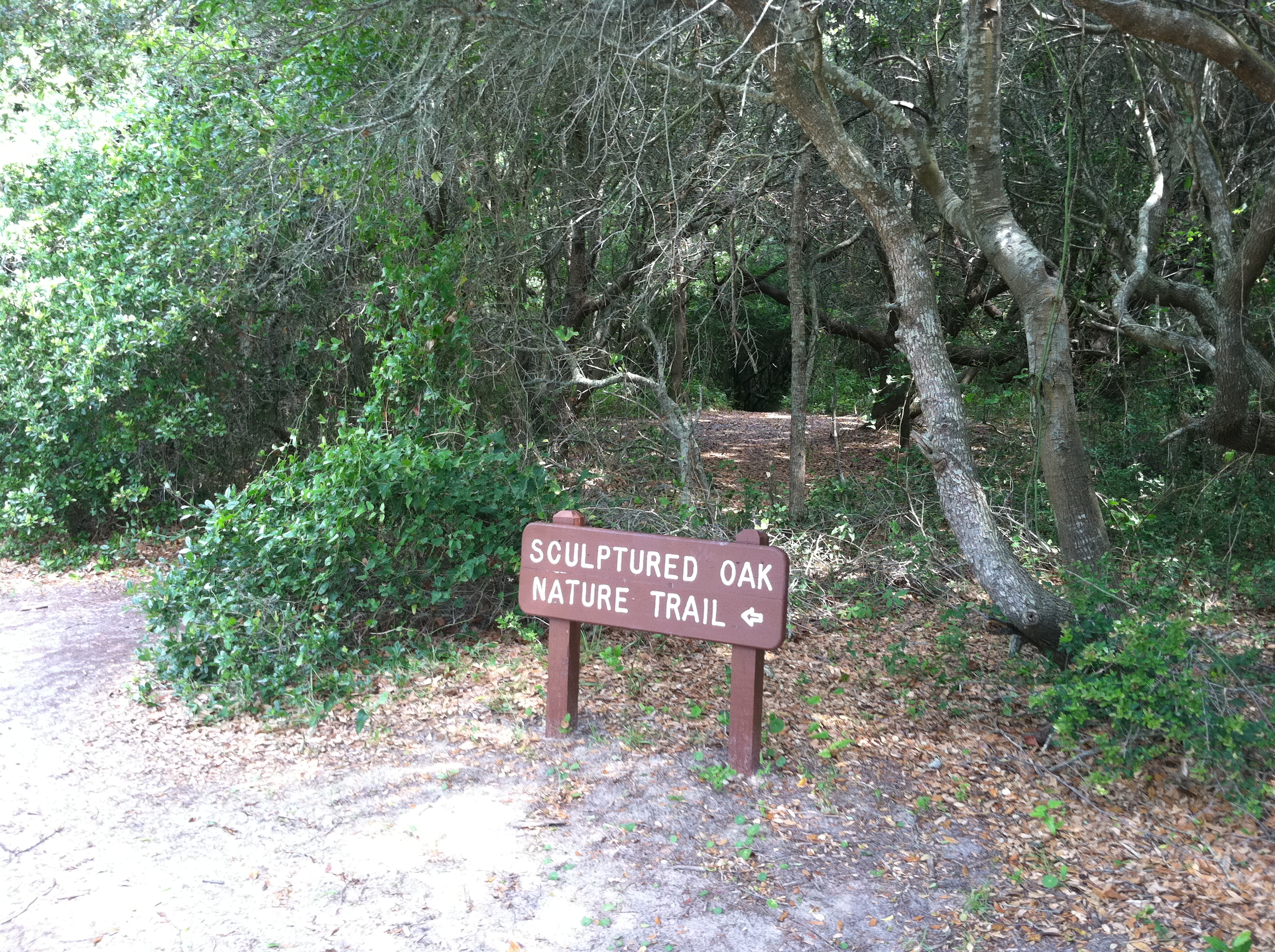
Entrance to Sculptured Oak Trail


The paths were a little less than a mile total, so I went down to the pond first, but the lack rain had left it pretty much dried up.  I then went back down the main trail and hung a right down the Yaupon trail until it came out in the parking lot near the beach.


A little ways back up to the left was the entrance to the Scultpured Oak trail. I took it back to the trail beginning. Overall, on the paths, I covered a bit less than 2 miles.  I then decided to go for 3 total and ran on the road through the campground section of the park.

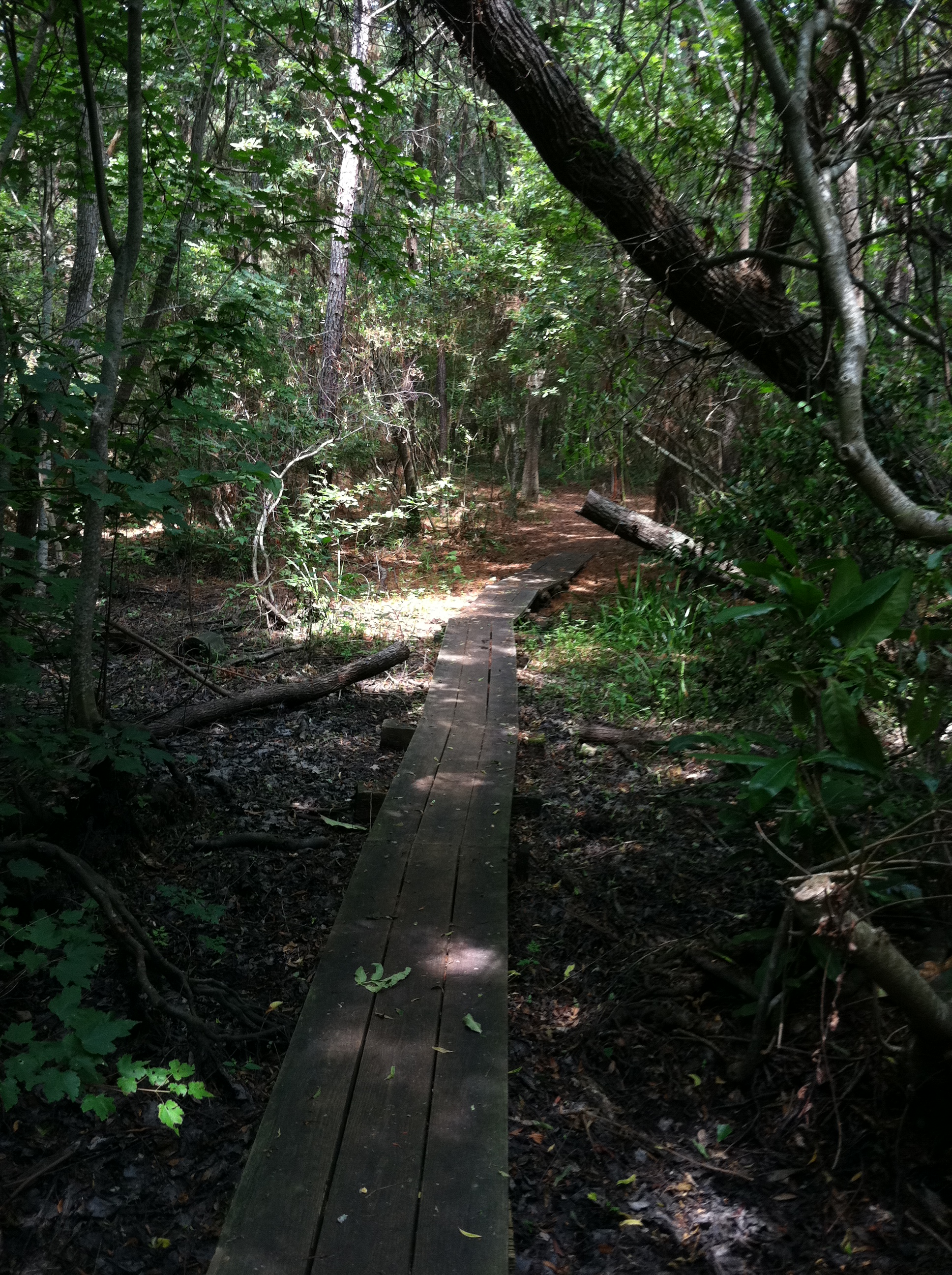
Plank Bridge on Trail

At the end of 3 miles, the temperatures were getting pretty warm, and I was about out of water in my handheld bottle, so I called it a day and headed back to the condo. Overall, I enjoyed the trip.  $5 well spent.  If you are visiting the Myrtle Beach area, take the family for a visit to the park.  There were additional  activities and a playground in the park to occupy them for a bit while you run.  Better yet, take them with you on the trail. POFIFOTO!

Beautiful Live Oak


read more